
17 Feb 2026
Christchurch doesn’t need selling. The numbers speak for themselves, and investors who have spent time on the ground know it. After several years of nationwide adjustment, the city now sits in one of the strongest commercial property positions in the country.
For investors looking at 2026 with a focus on discipline and long‑term income, Christchurch offers something rare: value, scale and demand that’s backed by activity.
At the end of 2025, Colliers noted that Christchurch’s commercial market is “uniquely positioned for sustained growth.” Their assessment reflects what we have observed at PMG over the past year: the city has reached a point of stability and maturity that’s been years in the making. Population growth, stronger visitor numbers and long‑term infrastructure investment are all contributing to a market that’s operating with far more confidence than even two or three years ago.
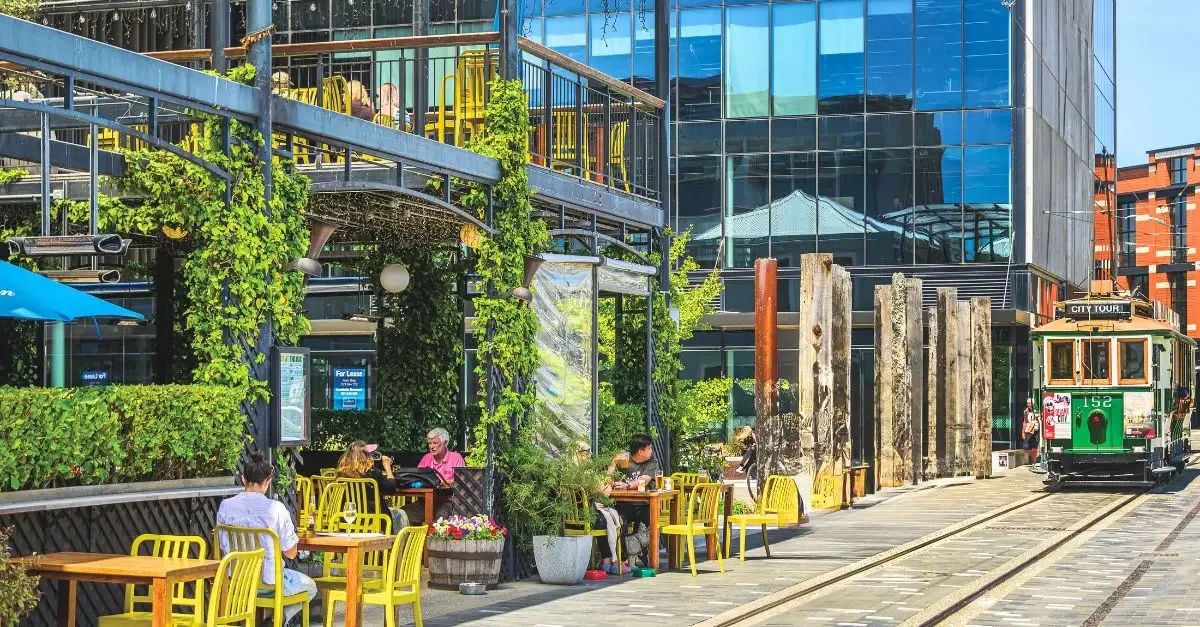
The city centre, rebuilt from the ground up, is now functioning as a modern business district with the kind of office, retail and mixed‑use assets you simply can’t find in most other parts of the country. That quality matters, and we’ve seen this evidenced by steady enquiry for PMG’s prime office properties in Christchurch, where we’ve had a steady stream of enquiries over the past year, welcoming new tenants (Kiwibank, Forbury) into our spaces.
Industrial has become the anchor of the Christchurch market, and for good reason.
Vacancies are running between 2–5% across key industrial zones, which is as tight as anything we see in the country. Land in western Christchurch is regularly trading above $400 per sqm, and smaller lots are reaching $500 per sqm. By comparison, similar land in Auckland can sit between $1,000–$1,500 per sqm, reinforcing the value differential Christchurch still offers.
New-build warehouse space is leasing in the $140–$160 per sqm range, backed by tenant demand that hasn’t softened despite a cautious economic backdrop.
These are the sorts of conditions that support consistent income today and create pressure for upward rental movement tomorrow.
Retail in Christchurch is also performing on solid footing, particularly in large-format, needs-based categories.
The new Mitre 10 MEGA Prestons is a good example of this. After a decade of planning, the store opened to serve one of Christchurch’s fastest‑growing suburbs, with a purpose‑designed layout, a tree‑house themed play area, and a café that functions as a standalone drawcard. It’s designed for a growing catchment, and that’s exactly what Prestons and its surrounding suburbs are experiencing.
PMG’s acquisition of the asset further strengthened our exposure to this sector, aligning with what we see as long-term resilience in essential, high‑traffic retail.
When retail growth is driven by demographic shifts and infrastructure, not discretionary spending spikes, it tends to persist.
RNZ’s commercial property “hotspots” report placed Christchurch at the top of the list (ahead of Auckland and Wellington), due to:
• Some of the lowest vacancy rates in the country
• Rising rents across several sectors
• Ongoing demand driven by post‑quake redevelopment and population movement
In PMG’s 2026 Outlook, we highlighted that commercial property investment is re-entering a period defined by clarity and discipline rather than urgency. Investors are looking harder at tenant profiles, lease terms, and income resilience, and they are certainly more selective about where they deploy capital.
That shift is visible in Christchurch’s development pipeline too. Construction costs have stabilised, but developers are being deliberate. New activity is largely tenant‑driven, not speculative. Put simply: projects are being built for occupiers who already exist, rather than for hypothetical demand.
Nationally, commercial property transactions reached $1.44 billion in 2025, signalling renewed confidence. Industrial and large-format retail led that trend - both sectors where Christchurch is performing well.
1. It has one of the newest commercial building stocks in the country.
2. Industrial supply is structurally constrained.
3. Population growth is feeding real commercial demand.
4. Investor sentiment is improving in step with market fundamentals.
Christchurch isn’t riding a wave of hype. It’s building on strong foundations: quality assets, a competitive cost base, and demand that continues to broaden across industrial, retail and office sectors.
For investors, this combination is hard to ignore. Christchurch offers both immediate income durability and longer‑term growth potential. And in a market where discipline is key, that makes it one of the most compelling parts of New Zealand’s commercial landscape heading into 2026.
Disclaimer: The information in this blog is of a general nature and was current as at February 2026. It is not intended to be regulated financial advice for the purpose of the Financial Markets Conduct Act 2013 and does not take your individual circumstances and financial situation into account. As with any investment, commercial property carries risks, including the risk of loss of capital. Past performance is not a guarantee of future results. PMG does not provide financial advice about whether an investment in one of its funds is right for you. Please seek advice from a licensed financial advice provider before making any investment decisions.


