
2 Mar 2026
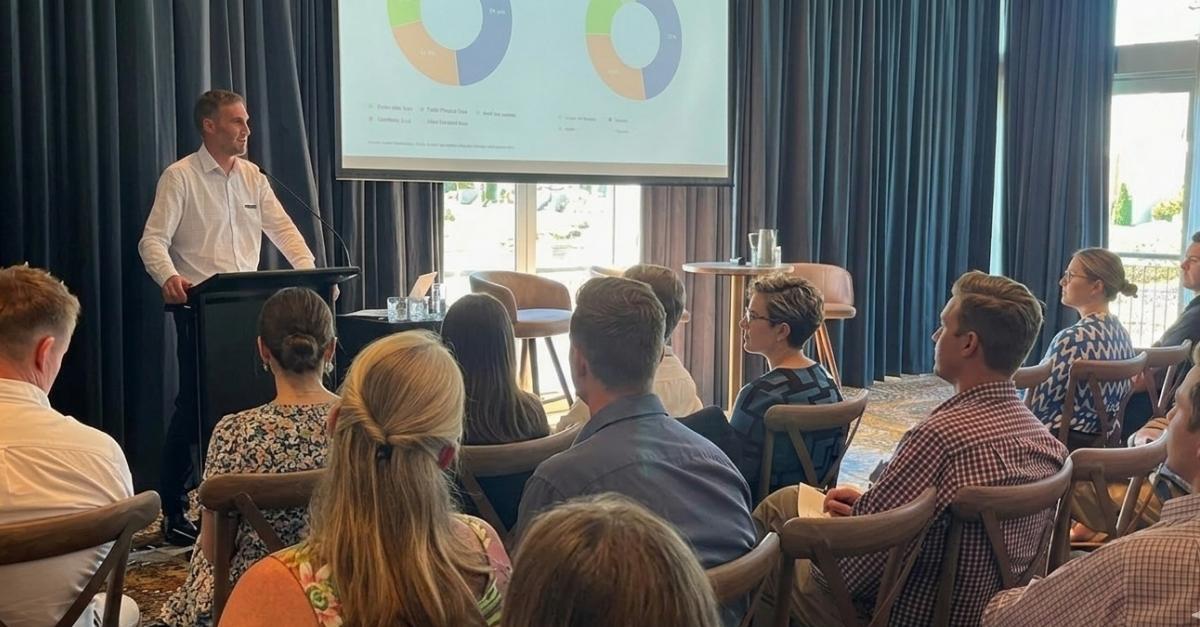
PMG recently hosted more than 200 investors and partners across Christchurch, Auckland and Tauranga as part of our Outlook 2026 series.
Across the three events, we were joined by a panel of respected industry voices - Leonie Freeman, Sharon Zollner, Mark Lister, Michelle Malcolm and Conrad Wilkshire - who shared a range of perspectives on the economic, investment and property environment.
The panel discussions explored where momentum is building and what investors should continue to monitor as the year unfolds.
A consistent theme across all discussions was that confidence has improved, but not without context.
ANZ Chief Economist Sharon Zollner noted that while expectations have lifted, what matters more is the improvement now being reported in real-world conditions. As she put it, “you would have to be a dyed in the wool pessimist to not think things were going to get better, but what’s changed is that people are now reporting improvement in what’s actually happening, not just what they expect.”
Mark Lister, Investment Director at Craigs Investment Partners, reinforced this point by highlighting the lag between policy settings and lived experience. He noted that interest rates have eased and household budgets are starting to breathe again, but that “there’s always a lag (sometimes 12 to 18 months) before rate cuts show up in the real economy.”
The panel agreed that expectations can turn quickly. What carries more weight are real-time indicators such as trading conditions, leasing activity and household financial positions - areas where momentum is now beginning to show.
For PMG, this reinforces a disciplined approach: responding to momentum as it appears in activity and fundamentals, rather than chasing sentiment alone.
While conditions are improving, panellists across all three events agreed that the recovery has not been uniform.
Zollner described New Zealand as “a country of two halves”, with regional and rural economies leading the way. She pointed to the South Island in particular, describing it as “a sea of green,” supported by agriculture, tourism recovery and more affordable housing.
Property Council New Zealand CEO Leonie Freeman echoed this unevenness at both a sector and city level, noting that “Christchurch is very strong, Auckland is positive with some large deals being done, and Wellington is more challenged which mirrors the broader macro picture.”
Lister added that this divergence is also visible in market behaviour. While regional areas have looked stronger for some time, supported by agriculture and tourism, he noted that “what’s been more encouraging recently is seeing Auckland start to feel more upbeat, and that matters because it’s such a large part of the economy.”
Rather than seeing this unevenness as a risk, the discussion framed it as a reminder of the importance of diversification across regions, tenants and asset types — a core principle underpinning PMG’s fund structures.
While cyclical conditions are improving, panellists pointed to structural shifts that are now firmly embedded in property markets.
Freeman highlighted the growing divide in office markets, noting that “there is less vacant space that is Green Star, and more vacant space that is non-star,” with sustainability already influencing both tenant and investor behaviour.
PMG CEO Scott McKenzie reinforced this bifurcation, observing that “lower quality, fringe-located buildings have been more impacted,” which is why PMG has been actively lifting the quality and resilience of its portfolio.
Lister framed the same issue from an investor’s perspective, noting that “not all assets recover at the same pace. Quality matters more than it used to, and that’s true across markets, not just property.”
The implication is clear: recovery will not lift all assets equally. Quality, location and resilience matter more than ever, and passive exposure is increasingly challenged in this environment.
Regulatory reform featured heavily in discussion, particularly around the Resource Management Act and building standards.
Freeman described the intent behind current reforms as reducing friction rather than lowering standards, explaining that “the purpose is to create a more efficient and cost effective process, so development can happen with clarity while still protecting the environment.”
On seismic reform, she highlighted the importance of certainty, noting that “the lack of clarity has held back investment,” as owners and developers struggle to understand what standard they should be building or upgrading to, with that uncertainty itself becoming a real cost.
For investors, the takeaway here was practical rather than political. Confidence grows when rules are clear, consistent and implementable, even if they are not perfect.
The panel also cautioned against focusing solely on the most visible economic indicators.
Zollner reminded the audience that measures such as unemployment and business failures are lagging, not leading, noting that “they tell you where the economy has been, not where it’s going.”
Lister expanded on what this means for investors, pointing out that term deposit rates have come down sharply. Once tax and inflation are factored in, returns are thin, which helps explain why “money that’s been sitting on the sidelines is starting to look for a new home.”
McKenzie highlighted the role of balance sheet discipline through recent cycles, noting that “lower leverage and proactive hedging allowed us to absorb the shocks of 2022–24 while continuing to deliver income.”
Together, these perspectives reinforced a core PMG belief: risk can’t be eliminated, but it can be effectively managed through structure, strategy and time.
When asked what markets may be underestimating, panellists pointed to longer term considerations rather than short-term volatility.
Lister observed that “markets rarely move in straight lines, and investors need to be comfortable with that,” reinforcing the importance of preparedness and diversification over prediction.
Across all discussions, one theme stood out: the next phase of the cycle is likely to reward discipline more than sentiment.
Recovery is taking shape, but it remains uneven and selective. In that environment, PMG’s focus remains unchanged:
As McKenzie summarised, “control what you can control, and stay focused on delivering sustainable outcomes through the cycle.”
Disclaimer: The information in this article is of a general nature and was current at March 2026. It is not intended to be regulated financial advice for the purpose of the Financial Markets Conduct Act 2013 and does not take your individual circumstances and financial situation into account. PMG does not provide financial advice. Please seek advice from a licensed financial advice provider before making any investment decisions.


